
8 Unusual Q-A About SIPL Solar HVLS Ceiling Fan
8 Unusual Q&A About SIPL Solar HVLS Ceiling Fan
When you hear “solar-powered ceiling fan,” you might think it only works when the sun is shining. Or that it’s too weak for a factory or warehouse. But the new generation of HVLS (high volume, low speed) solar fans is changing the game.
We’ve collected the most unusual, practical questions people ask about the SIPL Solar HVLS Ceiling Fan – and answered them straight from the specs and real-world logic.
1. “Does it run at night? Or on cloudy days – will I just sweat in the dark?”
Yes, it runs 24/7.
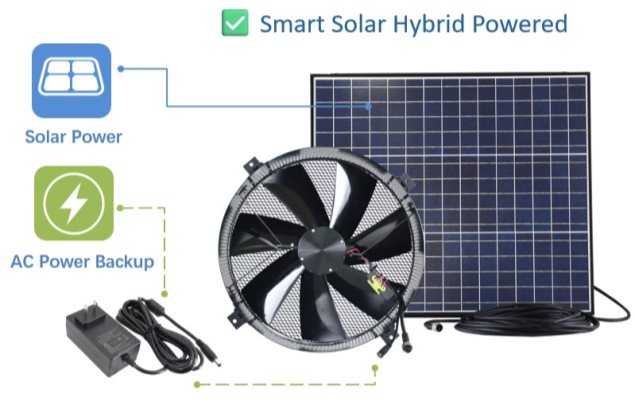
The SIPL solar HVLS fan uses a smart hybrid supply system. During sunny daytime, it runs directly on free solar energy (zero electricity cost). When clouds roll in, it automatically mixes solar + grid power. At night, it seamlessly switches to mains supply – but consumes no more than 180W (less than a traditional light bulb for a huge airflow).
So no, you won’t be left sweating in the dark. The fan keeps working, you just save less when the sun isn’t out.

2. “How much money can I really save? Give me a number.”
Up to 60% energy savings on cooling and ventilation compared to traditional fans or AC alone.
But here’s the kicker: during sunny daytime hours, your operating cost is $0. Over time, the fan pays for itself. If you pair it with air conditioning, you can cut AC load by 25–30% because the fan distributes cold air evenly – so you can set your thermostat higher.
For a small warehouse or café, the ROI often comes within 2–3 years (depending on local electricity prices and sun hours).
3. “A 3m / 10ft fan with a solar panel – is that even powerful enough?”
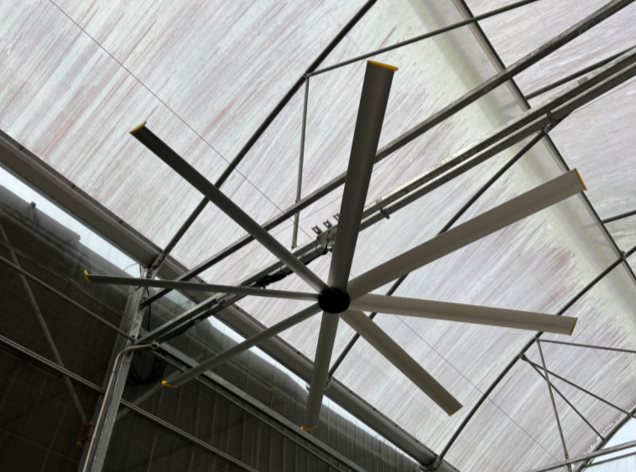
Surprisingly, yes. The fan moves 450 to 1225 CMM (cubic meters per minute). That’s enough to cover 50–100 sqm at low speed.
It doesn’t blast like a jet engine. Instead, it creates a gentle, wide breeze that makes you feel 3–8°C cooler in summer (perceived temperature drop). In winter, reverse mode pushes warm air down from the ceiling – reducing heating costs.
The secret: a gearless BLDC motor (PMSM type) that runs at only 68 RPM max but moves huge air volume thanks to 8 airfoil aluminum blades.

4. “I hate maintenance. How often do I need to oil or fix this thing?”
Never oil it. There’s no gearbox. The motor is direct-drive, brushless, and sealed to IP68 – fully waterproof and dustproof. No lubrication, no belt changes, no carbon brushes to replace.
The fan blades are anodized aluminum (anti-rust, anti-corrosion). The housing is heavy-duty aluminum alloy.
Basically: install it, and forget about maintenance for years. The motor alone is rated for over 15 years of life.
5. “Can this work in a humid or dusty environment? Like a dairy barn or auto shop?”
Yes. IP68 motor means it’s fine with humidity, rain splashes, or power washing (not direct jet, but moisture is no problem).
The blades are anti-corrosion anodized aluminum – so ammonia in dairy farms or chemicals in workshops won’t eat them.
Even the solar panel is industrial monocrystalline (555W) with a rugged frame.
The only limit: don’t install in extreme acidic/alkaline corrosive gas environments (e.g., certain chemical plants). For normal industrial, agricultural, or commercial spaces – it’s built to last.

6. “Wait – it has two modes? Summer and winter? How does a fan help in winter?”
This is the most underrated feature. In winter, you reverse the fan direction (via remote or app). Hot air naturally rises to the ceiling – up to a 10°C difference between floor and ceiling. The fan gently pushes that warm air back down without creating a chilling draft.
Result: your heating system works less, and you feel warmer at the same thermostat setting. Energy savings of 25–30% on heating costs.
So it’s not just a “cooling fan” – it’s a year-round energy tool.

7. “Is installation complicated? Do I need a special electrician?”
No. The system runs on low voltage (DC from the solar panel, with an AC/DC adapter for backup). It’s designed as plug-and-play.
The controller automatically manages solar vs. mains switching – you don’t need to flip switches.
Mounting requires a solid ceiling structure (downrod is 800mm aluminum, can be customized). But wiring is simpler than a traditional high-voltage fan because of the low-voltage DC side.
Most local electricians can install it in half a day.
8. “What happens if the solar panel breaks after 5 years?”
The panel has a 25-year designed lifespan and a 15-year warranty. The fan’s motor: 15-year life / 5-year warranty. Adapter and controller: 10-year life / 5-year warranty.
And because it’s modular, you can replace individual parts – motor, controller, blades, or panel – without buying a whole new fan.
Final Takeaway
The SIPL Solar HVLS Ceiling Fan isn’t a gimmick. It’s a genuine hybrid solution for people who want free daytime cooling, low nighttime power draw, and year-round HVAC savings. Whether you run a warehouse, gym, restaurant, or dairy farm – it answers the old question: “How do I stay comfortable without bankrupting my electricity bill?”
Enjoy the sunlight. Stay cool (and warm). And let the fan pay for itself.

-
How Can Solar Powered Vent Fans Improve Your Home Cooling
넶16 2026-07-17 -
-

-
-
-