
The Building’s Relief Valve How a Solar Wall Fan Prevents Your Factory from “Suffocating”
The Building’s Relief Valve: How a Solar Wall Fan Prevents Your Factory from “Suffocating”
Picture this: It’s a July afternoon. Your factory floor is packed with machines running at full capacity, workers moving between stations, and hot air rising toward the ceiling. You open a door – nothing happens. You turn on a few old wall fans – they just stir the same stale air around.
Your building is suffocating.
Without proper ventilation, industrial spaces become pressure cookers. Heat builds up. Humidity condenses on metal surfaces. Dust, fumes, and CO₂ accumulate. Workers feel sluggish. Machines run hotter. And your electricity meter spins faster as air conditioners struggle against the impossible.
What if you could install a relief valve for your building – a device that actively pushes out the bad air and pulls in fresh, cool air, using nothing but free sunlight?
That’s exactly what the SIPL Solar Industrial Wall Fan does. Let’s explore how it turns your factory from a gasping, overheated box into a breathing, comfortable workspace – while cutting energy bills by up to 80%.
Why a Factory Needs a “Relief Valve” (And Why Windows Aren’t Enough)
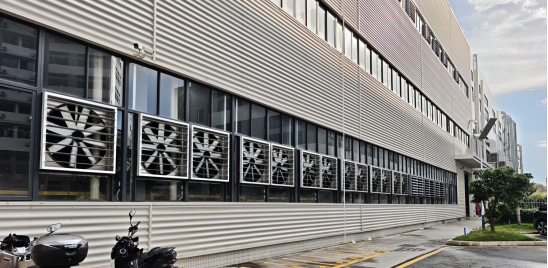
Most industrial buildings were designed with one simple ventilation strategy: open a few windows or install a ridge vent. But that’s passive ventilation – it only works when wind blows and temperature differences create a weak draft.
In reality:
· Heat rises and gets trapped near the ceiling (temperature differences of 10–15°C between floor and roof are common).
· Machinery, lighting, and people constantly add heat and pollutants.
· Dust, welding fumes, chemical vapors, and even CO₂ from forklifts have nowhere to go.
The result? Building suffocation – a state where indoor air becomes stagnant, hot, humid, and unhealthy.
The solution is active negative pressure ventilation. A powerful exhaust fan creates a low‑pressure zone inside the building, forcing stale air out through the fan while drawing fresh outdoor air in through windows, doors, or dedicated intakes. It’s the same principle your lungs use when you exhale.
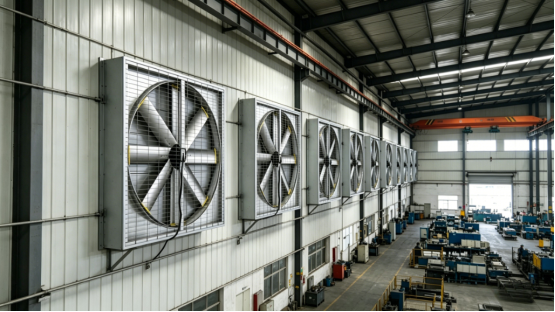
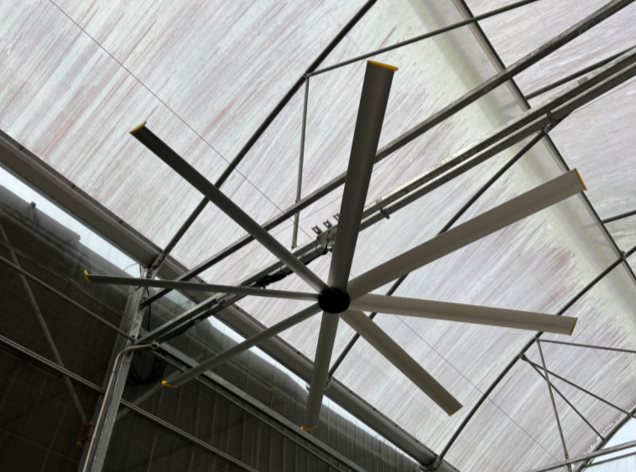
The SIPL Solar Industrial Wall Fan is that exhaust muscle – a high‑volume, low‑speed (HVLS‑style) wall fan that moves massive amounts of air out of your building, turning it into a well‑ventilated, breathable space.

Real‑World Benefits: From Gasps to Easy Breaths
1. Temperature Reduction Without Air Conditioning
In a typical factory, roof heat gain can push indoor temperatures 10–15°C above outdoor. After installing a SIPL wall fan, users report:
· 5–8°C drop in peak indoor temperature
· No more “wall of heat” when entering the building
· Workers need fewer breaks, make fewer errors
2. Humidity Control & Mold Prevention
Humidity is a silent killer for inventory, machinery, and health. The SIPL fan’s high air exchange rate pulls out moist air before it can condense on cold surfaces. No more rusty tools, moldy cardboard, or slippery floors.
3. Improved Air Quality (IAQ)
Welding fumes, paint solvents, diesel exhaust from forklifts, and even airborne dust from raw materials – all are continuously diluted and expelled. Workers breathe easier, and respiratory complaints drop.
Where Does This “Relief Valve” Work Best?
The SIPL Solar Industrial Wall Fan is designed for medium to large spaces:
· Factories & workshops – remove process heat, dust, fumes
· Warehouses & distribution centers – prevent humidity damage to goods
· Greenhouses & farms – control heat and humidity for plants/animals
· Auto repair shops & hangars – exhaust exhaust fumes
· Gyms & sports halls – keep air fresh even with heavy sweating
· Poultry houses & dairy barns – reduce ammonia and heat stress (IP68 motor tolerates washdown)
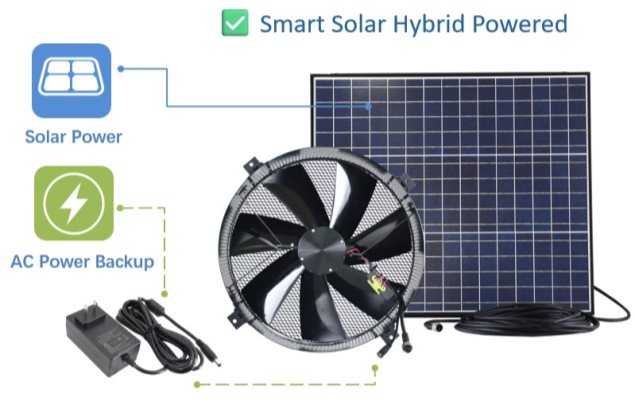
Because it’s solar‑hybrid, it works even in off‑grid locations or places with unreliable electricity.
Installation & Maintenance: Simple, Rugged, Low‑Cost
· Mounting: Cut a square hole in the exterior wall (1220×1220mm or 1360×1360mm), bolt the fan frame in place. The included stainless steel guard prevents animal entry.
· Electrical: The solar panels are plug‑and‑play (MC4 connectors). The AC adapter plugs into a standard outlet. No inverter, no complex wiring.
· Maintenance: The gearless direct‑drive BLDC motor has no belts, no brushes, no oiling. Wipe the aluminum blades once a year. The electric shutter mechanism is sealed and rated for thousands of cycles.
· Lifespan: Solar panel >25 years, metal casing >20 years, motor >15 years (5‑year warranty).
Why “Relief Valve” Is the Perfect Metaphor
A pressure relief valve on a steam boiler is a simple device: when pressure gets too high, it opens and vents steam, preventing an explosion. Your building is no different. When heat, humidity, and pollutants build up, you need a valve that opens automatically (or by smart control) and vents the pressure.
The SIPL Solar Industrial Wall Fan does exactly that – but instead of wasting energy, it uses free sunlight. Instead of just opening a hole, it actively pulls the bad air out. Instead of adding to your carbon footprint, it shrinks it.
The Bottom Line: Stop Your Factory from Suffocating
If you’ve ever walked into your facility on a summer morning and felt the air hit you like a wet blanket, you already know the problem. You don’t need more AC – you need to exhaust the heat and humidity at their source.
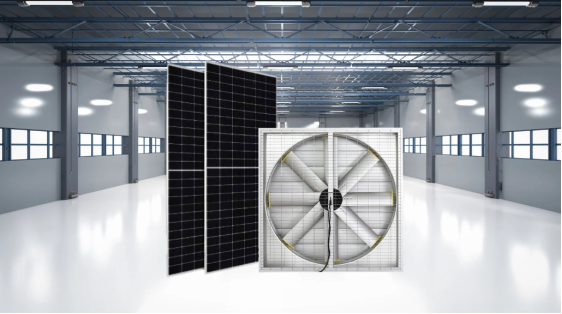
The SIPL Solar Industrial Wall Fan is that exhaust. It’s a high‑powered, low‑energy, smart‑controlled relief valve for your building. And because it runs mostly on sunshine, it pays for itself faster than almost any other industrial upgrade.
Ready to let your building breathe? Contact SIPL today for a free ventilation assessment and ROI calculation for your specific facility.

-
How Can Solar Powered Vent Fans Improve Your Home Cooling
넶16 2026-07-17 -
-

-
-
-